Wish you could leave the car at home and still reach the sand, a café, and a sunset trail on foot? If a low-key beach town with real walkability is on your list, Carpinteria delivers. You get a small, village-like feel, compact commercial streets, and coastal open space that invites daily strolls. In this local’s guide, you’ll find the most walkable pockets, what life looks like in each, and how to buy smart in a coastal town. Let’s dive in.
Why Carpinteria feels walkable
Carpinteria is a small coastal city with a compact downtown near the beach, which naturally creates short, human-scale blocks and easy walking routes. Mild, Mediterranean weather keeps walking comfortable year-round. The town’s scale also means a few distinct pockets stand out for day-to-day convenience and beach access.
You have regional options when you need to go farther. The Amtrak Pacific Surfliner stop in Carpinteria connects you north and south, including Santa Barbara. For a quick snapshot of the city, see the U.S. Census QuickFacts for Carpinteria.
Walkable pockets at a glance
- Linden Avenue and the Beach: The town’s most concentrated “walk-to-everything” zone with dining, cafes, and sand access.
- Carpinteria Bluffs access: Open-space trails, ocean views, and quiet beach links with a recreation-first vibe.
- Everyday convenience pockets: Residential streets near groceries, pharmacy, post office, and schools for practical daily errands.
Linden Avenue and the Beach
What it feels like
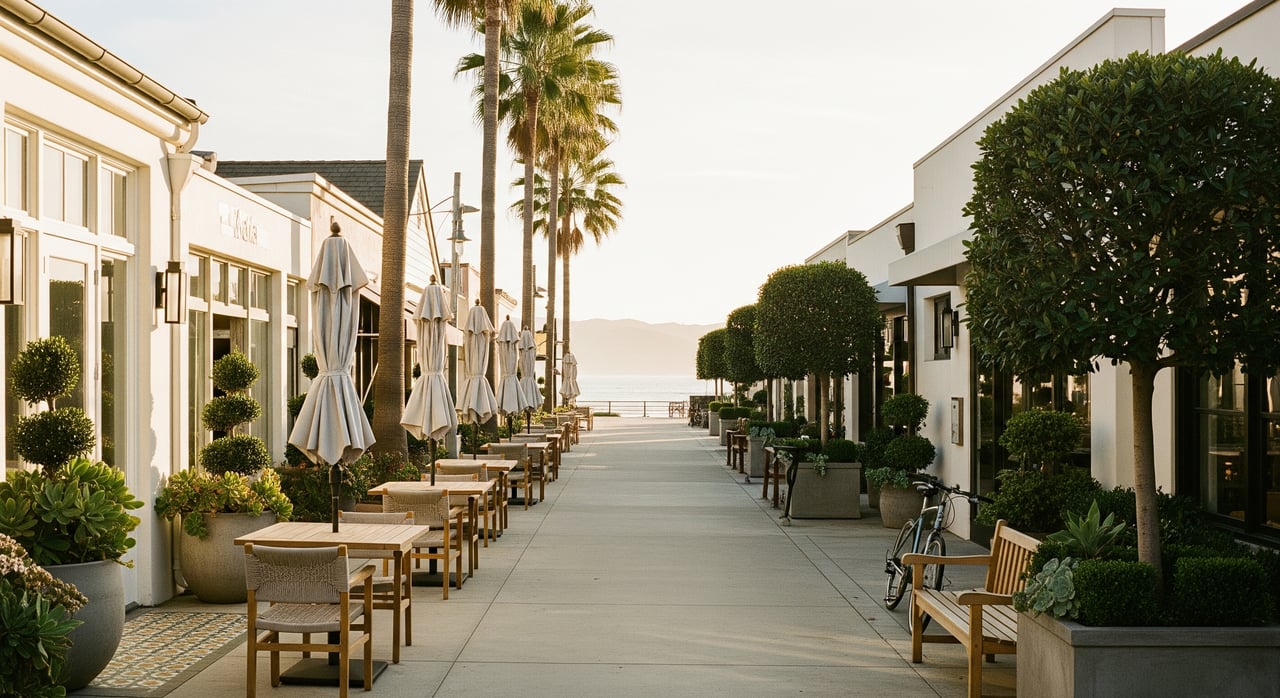
Linden Avenue is Carpinteria’s main walkable spine. You can stroll for coffee, grab a casual meal, and reach beach entry points in minutes. The Amtrak station is walkable from parts of this corridor, depending on your exact block.
Housing mix and walk times
You’ll find small multifamily buildings, condos, older beach cottages, and a limited number of newer, higher-end condos or remodeled homes. From many points along Linden, beach access is often a 2 to 10 minute walk. Most amenities cluster within a few blocks, so daily errands stay simple.
Pros and tradeoffs
- Pros: Immediate beach access, strong pedestrian environment, and stroll-to-dining convenience.
- Tradeoffs: Higher price per square foot close to the sand, seasonal visitor traffic and parking pressure, and more complex coastal permitting for remodels near the shoreline.
Carpinteria Bluffs access
What to expect on the trails
The Carpinteria Bluffs area offers bluff-top walking paths, ocean overlooks, and access to quieter stretches of beach. Expect benches, birdwatching, and tidepooling options depending on the exact access point.
Nearby housing and vibe
Homes and condos near the Bluffs often aim to capture ocean or bluff views. You will see both single-family streets and remodeled or newer infill properties oriented to maximize scenery.
Pros and tradeoffs
- Pros: Daily recreation without a car, sunrise and sunset walks, and a calmer setting than central commercial blocks.
- Tradeoffs: Erosion and bluff stability can affect building plans, coastal rules are a factor, and public view corridors or trail setbacks may influence future changes.
Everyday convenience pockets
What these pockets offer
These are modest residential corridors near groceries, pharmacy, post office, small medical offices, and schools. They are built for practical errands and routines rather than nightlife.
Housing and feel
Expect single-family homes, duplexes, and small apartment buildings with tree-lined streets and sidewalks in many areas. Layouts are more traditional suburban, which can make walking routes predictable and low-stress.
Pros and tradeoffs
- Pros: Walk-to-errands convenience and less exposure to tourist crowds.
- Tradeoffs: Not every block is a five-minute walk to full-service stores, and some errands still require a short drive. Transit and bike lanes may be less frequent than in larger cities.
Buying smart in walkable zones
Zoning and coastal rules
Properties near the shoreline and bluffs can fall under additional permitting oversight. Review local rules on the City of Carpinteria municipal site and see broader policies through the California Coastal Commission. Ask about prior Coastal Development Permits, variances, and permit histories for any planned remodel.
Flood, erosion, and sea-level considerations
Coastal parcels may be mapped in FEMA flood zones and can face long-term sea-level or erosion exposure. Check the FEMA Flood Map Service Center, then explore scenarios in the NOAA Sea Level Rise Viewer. Factor elevation, insurance, and any planned coastal defenses into your valuation.
Parking, traffic, and seasonal tourism
Beach-adjacent streets see more visitors in summer and during events. If a condo is in the mix, confirm assigned spaces and guest policies. A smart step is to walk the block on a weekday morning, a weekday afternoon, and a weekend evening in summer to gauge noise and parking.
Short-term rentals and local ordinances
Rules around short-term rentals can change and may include registration, caps, or taxes. Always verify current policies with the City of Carpinteria before you plan on rental income. If the property has previous STR approvals, ask for documentation.
Utilities, services, and connectivity
Carpinteria is a small town, so late-night services are limited. Confirm the closest full-service grocery, pharmacy hours, nearby clinics, and reliable internet options if you work from home. Map these against each candidate property before you write an offer.
Resale drivers to watch
Walkable coastal homes typically carry strong lifestyle demand. Proximity to the beach and Linden Avenue, permitted status with no open violations, and manageable coastal risks tend to support resale appeal.
Sample day-in-the-life
Linden Avenue local
- 7:30 AM: Five to ten minute stroll to a café on Linden for coffee and a pastry.
- 8:00 AM: Ten to twenty minute walk on the beach or a short run on the sand.
- 9:00 AM: Quick grocery pickup within a few blocks, then home.
- Evening: Walk to dinner on Linden and enjoy an outdoor event when it pops up.
Bluffs trail regular
- 6:30 AM: Sunrise walk on the Bluffs with ocean views and birdwatching.
- 8:00 AM: Walk to a local market or café for breakfast to go.
- Late afternoon: Short walk to tidepools or a coastal bike ride.
- Night: Relax at home with views, or stroll to a pocket park for sunset.
Family errand pro
- 8:00 AM: Walk kids to a nearby school or meet neighbors at a local park.
- Midday: Post office and pharmacy run by foot from home.
- Weekend: Farmers market stroll, then an easy dinner on Linden, biking back on low-traffic streets.
Getting around beyond your block
For regional trips, the Amtrak Pacific Surfliner offers a convenient rail option. Many commutes to central Santa Barbara run about 15 to 25 minutes by car, depending on traffic. Local and regional bus networks connect Carpinteria to county services listed on Santa Barbara County resources, though most residents still rely on a car for commuting.
How to choose your Carpinteria pocket
Use this quick checklist as you tour:
- Define your top priority: immediate beach access, daily errands on foot, or bluff-top trails.
- Map the walk: time your route to the sand, a grocery, a pharmacy, and the post office.
- Visit at three times: weekday morning, weekday afternoon, and weekend evening in summer.
- Verify coastal and city permits: check the City of Carpinteria site and ask about prior approvals.
- Check risk maps: review the FEMA Flood Map Service Center and the NOAA Sea Level Rise Viewer.
- Confirm parking: assigned spaces, guest policies, and street rules.
- Align with your lifestyle: school proximity, internet needs, and after-hours services.
- Understand walkability scores: read up on Walk Score’s walkability concept and then validate with your own feet.
Work with a local team
You deserve guidance from experts who live and work this market every day. Crawford Speier Group pairs boutique, hands-on service with deep neighborhood knowledge across Santa Barbara County. With 200-plus transactions in the last five years and a Top 1 percent ranking in the county, the team brings calm execution and clear advice to your search.
Ready to explore walkable Carpinteria homes and choose the right pocket for your life? Reach out to Crawford Speier for local guidance and a smooth plan from first tour to close.
FAQs
How walkable is Carpinteria for daily errands?
- Carpinteria has a compact downtown and several small commercial nodes, so many errands can be done on foot depending on your block; confirm by timing your own routes and reviewing resources like Walk Score’s walkability concept.
What train options serve Carpinteria if I want a car-light lifestyle?
- The Amtrak Pacific Surfliner stop in Carpinteria connects you to Santa Barbara and cities north and south, which pairs well with walkable neighborhoods near the station.
Are there special permitting rules near the beach or Bluffs in Carpinteria?
- Yes, coastal properties may require additional approvals; review the City of Carpinteria municipal site and consult the California Coastal Commission for guidance on Coastal Development Permits and setback rules.
How do I check flood risk for a Carpinteria property?
- Start with the FEMA Flood Map Service Center for current flood zones and use the NOAA Sea Level Rise Viewer to understand long-term coastal exposure, then factor findings into insurance and valuation.
What is parking like near Linden Avenue in peak season?
- Parking can be tight during summer and events; walk the block at different times, confirm assigned spaces and guest policies if in an HOA, and plan for visitor patterns.
Are short-term rentals allowed in Carpinteria?
- Rules can include registration, caps, or taxes and may change; verify current regulations and enforcement on the City of Carpinteria site before counting on rental income.